The modules
Twelve modules, one patient record underneath them. Clinics normally start with records, cycles and embryology, then bring cryobank, pharmacy and billing across once staff are comfortable.
Electronic medical records
The clinical spine of the system. History, examinations, investigations, letters and consents live in one record that follows the patient across every cycle, so a clinician picking up a case in year three is not reading someone else's shorthand.
Patient & donor portals
Separate portals for people in treatment and for donors. Appointments, results, documents and consents are visible to the people they belong to, which takes a large share of routine calls off the front desk.
Cycle management
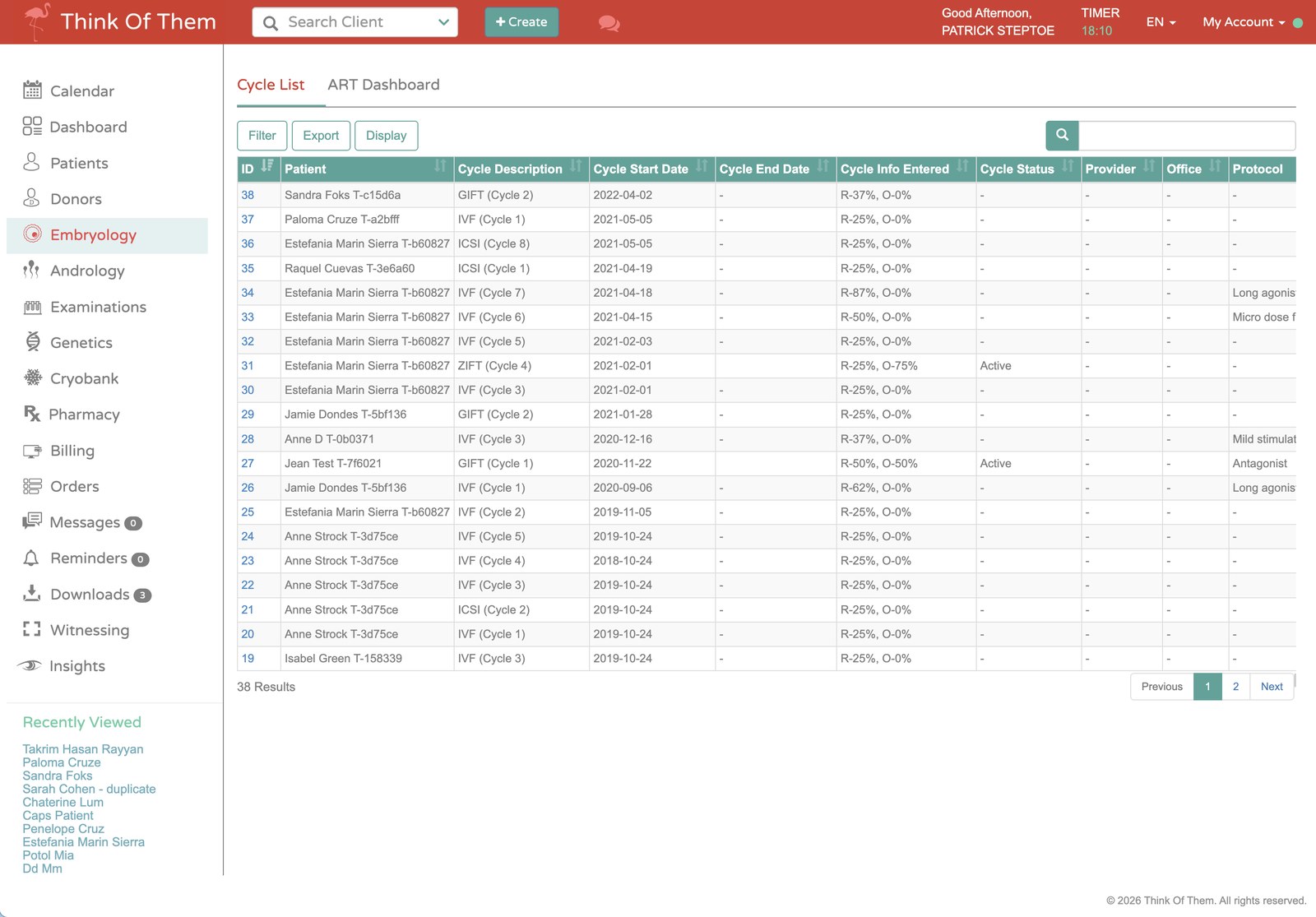
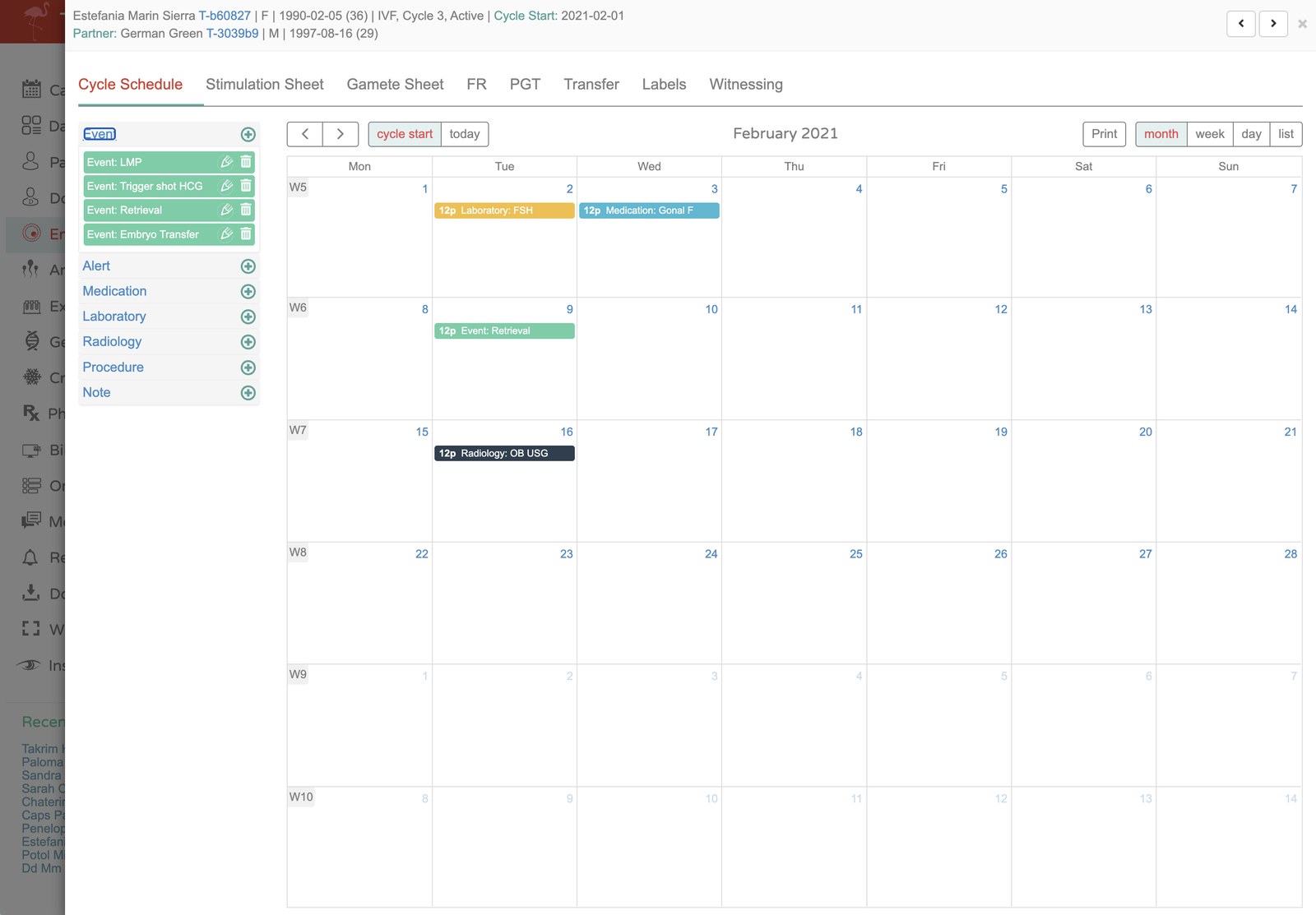
Each cycle has a protocol, a monitoring schedule, dosing, visit-by-visit findings and a status the whole team can see. Cancellations, conversions and repeat cycles stay attached to the same patient history.
Embryology
Fertilisation method, fertilisation check, daily development and grading recorded at the bench. Every observation ties back to the cycle, the patient and the specimen it came from.
Andrology
Semen analysis, preparation and sample handling recorded in the same case file the clinical team is working in, rather than in a laboratory book that has to be reconciled later.
Witnessing
Electronic witnessing at every specimen handling step. The second pair of eyes is recorded against the specimen, the cycle and the person who checked it, rather than initialled on a sheet that has to be filed.
Genetics & PGT
Where a cycle includes genetic testing, the partner laboratory issues its report inside the platform, attached to the patient, the cycle and the individual embryo the biopsy came from. Preimplantation testing is run by Reproductive Genetic Innovations in Chicago, which manages its own laboratory workflow here.
CryoBank
Inventory down to the individual straw: tank, canister, cane and position, with the consent that authorises storage and the term it runs for. Locating a specimen becomes a search, not an archaeology exercise.
Laboratory
Order investigations, track collection and turnaround, and read results in the record that prompted them, including the genetic panels described on the genetics page.
Pharmacy
Medication orders and dispensing tied to the stimulation protocol, so what was prescribed, what was issued and what the patient was told line up.
Orders
One queue for every request the clinic raises — laboratory, radiology, genetics, procedures — with status and turnaround visible without asking anyone.
Billing & financial management
Invoices, payments, packages and cycle costing that reconcile against the clinical work actually recorded, which is also what makes the clinic's own reporting trustworthy.
Messages & reminders
Appointment reminders and secure messages to patients and donors, sent from the record and logged against it, so what the clinic told someone is part of the case.
Reporting & analytics
Activity, outcome and workload reporting built on the clinical record rather than a parallel spreadsheet. Cycle counts, fertilisation and pregnancy rates, laboratory throughput and utilisation come out of the same data the clinicians entered.
Predictive analytics
Learning models over clinical and genetic data that estimate outcomes for an individual patient. They improve as more information arrives — genetic results, outcomes from previous treatment and new findings from peer-reviewed research — and they inform a clinical decision rather than making one.
Voice recognition
Dictation into the clinical record, so notes can be captured with gloves on at the bench or while facing a patient in consultation instead of a keyboard.
 Think Of Them