 Think Of Them
Genetics
Genetics that lands in the record, not in an inbox
TOT is software, not a laboratory. What it does is carry a genetics report from the laboratory that produced it to the clinician who ordered it, attached to the cycle and the embryo it belongs to.

Preimplantation genetic testing with RGI
Reproductive Genetic Innovations is a preimplantation genetic testing laboratory in Chicago, Illinois. After fertilisation, once an embryo has divided, a single cell is biopsied. RGI extracts and amplifies the DNA from that cell and analyses it on its own equipment, and the report can cover a great deal: whether a specific inherited condition has been passed on, which mutations are present, chromosomal findings.
RGI runs that work inside TOT. The laboratory manages its own preimplantation testing workflow in the platform, in modules built for it, and delivers each finished report to the clinic through the same platform the clinic is already working in. We do not perform the testing and we do not interpret it.
RGI publishes the arrangement on its own site: its patient and provider portal is powered by TOT. Patients submit reports and book genetic counselling there; providers order tests, request biopsy kits and read results. Both sit on this platform.
RGI has worked in preimplantation genetic testing since 1989 and specialises in single-gene disorders.
- The clinic raises the request from the cycle it belongs to, alongside everything else that cycle needs.
- Embryology takes the biopsy and records it at the bench, witnessed electronically against the individual embryo.
- The laboratory analyses the sample — DNA is extracted and amplified, and the analysis is run on the laboratory's own equipment.
- The laboratory issues the report in the platform, against the embryo the biopsy came from.
- The clinician reads it in the cycle and records the transfer decision in the same place.
Carrier screening, and what became of it
A programme we ran ourselves for several years, described here because the collaboration was real and clinics still ask about it.
For several years we ran a carrier screening programme of our own for clinics using the platform, most of them in Mexico. A clinic collected saliva from a couple in our collection tubes and sent the tubes to us. We passed them to Génome Québec, whose laboratory extracted the DNA, amplified it and read it on Illumina genotyping microarrays, and returned the raw data. Our part was the analysis: reading that data for recessive mutations and turning it into a result a clinician could use.
That result is the plain arithmetic of a couple who both carry the same recessive mutation — one child in four affected, two in four carriers, one in four neither. Results went back into the platform, where the clinic read them beside the rest of the patient record. We no longer run this programme routinely.
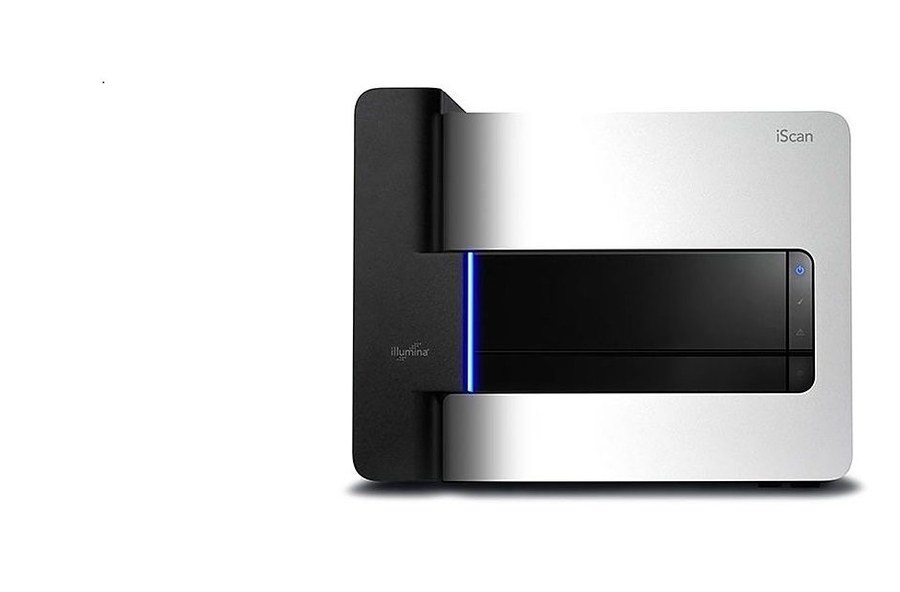
Microarray scanning of the kind Génome Québec used in the carrier screening programme described here. The equipment was theirs, not ours.
Predictive analytics
The platform builds models over the clinical data a clinic has already entered — cycles, protocols, laboratory findings and outcomes — to estimate the probability of pregnancy for an individual patient. The estimate sharpens as more cycles close in that clinic.
The purpose is narrow and worth stating plainly: to help a clinician and a patient make a better-informed decision about treatment, and about when to freeze reproductive material. A model informs a clinical decision; it does not make one.
Who we work with
Reproductive Genetic Innovations in Chicago for preimplantation testing. Génome Québec and Illumina microarray technology in the carrier screening programme described above, and Norgen Biotek for the saliva collection kits it used. We have also collaborated with the Universidad de Chile GENOMED laboratory on human genetics research, with support from Corfo.




Laboratories interested in delivering their results to clinics through the platform are welcome to write to us.
See it against your own workflow
Half an hour, your cycle types, your lab, your questions about migrating what you already have.